Behind the Scenes at Stamford Bridge: Chelsea vs Liverpool

Working on a live football match is an intense and rewarding experience. On October 4th 2025, I had the opportunity to be part of the production team at Stamford Bridge for the Chelsea vs Liverpool game. This match brought together two of the Premier League’s biggest clubs, and being behind the scenes gave me a unique perspective on what it takes to bring such a high-profile event to viewers around the world.
Preparing for the Match
The day started early, hours before the players stepped onto the pitch. The production team arrived at Stamford Bridge to set up all the necessary equipment and coordinate with other departments. The camera team was busy positioning cameras around the stadium to capture every angle of the game. This included the main cameras behind the goals, the ones tracking the players along the sidelines, and the overhead cameras for aerial shots.
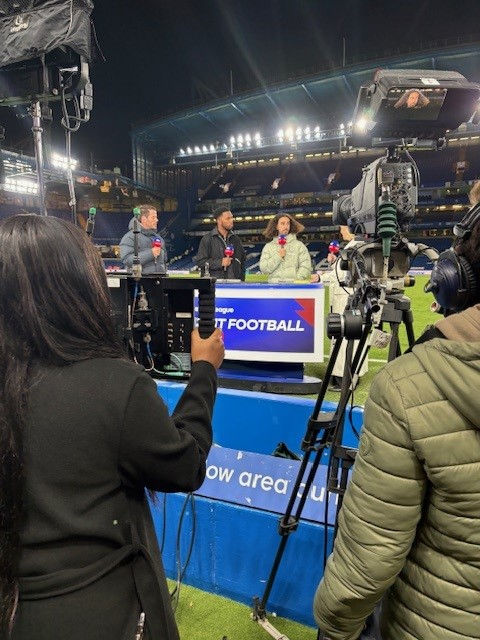
The scenery team worked on ensuring the stadium looked perfect for the broadcast. This involved setting up the pitch side desk and ensuring the pitch was pristine. The floor managers coordinated with the production team to manage timing cues and communicate with the commentators and camera operators during the live feed.
Sound technicians checked microphones placed around the stadium, including those near the goals and in the stands, to capture the atmosphere and on-field action clearly. The coordination between these teams was crucial to ensure a smooth broadcast.
Working with the Camera Team
One of the most fascinating parts of the day was working closely with the camera operators. Each camera had a specific role, and the operators needed to be ready to capture fast-paced action without missing a moment. The director communicated with them constantly, switching between cameras to provide the best possible coverage.
I observed how the camera team anticipated key moments, such as a striker preparing for a shot or a goalkeeper readying for a save. Their ability to predict the flow of the game and adjust their focus accordingly was impressive. The teamwork between the director, camera operators, and floor managers ensured that the broadcast was dynamic and engaging.
The Role of Floor Managers

Floor managers acted as the vital link between the production control room and the on-field teams. They relayed instructions, managed timing for replays, and ensured that the broadcast stayed on schedule. During the match, they coordinated with the camera team to prepare for close-ups or crowd shots and communicated with the sound team to adjust audio levels as needed.
Their role required quick thinking and clear communication, especially when unexpected events occurred on the pitch. For example, when a goal was scored, floor managers helped coordinate the celebration shots and ensured the commentators had the right visuals to describe the moment.
Capturing the Atmosphere with Sound
Sound is often overlooked but plays a huge role in bringing a live sports event to life. The sound team at Stamford Bridge set up multiple microphones to capture the roar of the crowd, the referee’s whistle, and the players’ communication. Balancing these sounds so that viewers at home feel immersed in the stadium atmosphere is a delicate task.
During the Chelsea vs Liverpool game, the crowd’s energy was palpable, and the sound team worked hard to ensure that energy translated through the broadcast. They also managed the audio feeds for the commentators, making sure their voices were clear without overpowering the natural sounds of the game.
Challenges and Quick Solutions
Live sports production is full of challenges. Technical issues can arise at any moment, and the team must respond quickly to avoid disrupting the broadcast. During this match, there was a brief issue with one of the side line cameras losing signal. The production team immediately switched to backup cameras while technicians worked to fix the problem.
Another challenge was managing the timing of replays. The floor managers had to coordinate closely with the director to decide which moments to replay and when, ensuring the broadcast flowed smoothly without unnecessary delays.
The Importance of Teamwork
What stood out most during my time at Stamford Bridge was the level of teamwork required. Each department had a specialized role, but none could succeed without the others. The camera team relied on the floor managers for cues, the sound team depended on the timing set by the production control, and the scenery team ensured the visual elements were perfect.

This collaboration created a seamless viewing experience for millions of fans watching at home. It was clear that every person, from the camera operators to the sound technicians, played a crucial part in delivering a high-quality broadcast.
Final Thoughts on the Experience
Being part of the production team for the Chelsea vs Liverpool game was an eye-opening experience. It showed me how much work goes into every second of a live sports broadcast. The coordination, quick decision-making, and technical skills required are immense.


Comments